
If you want to go far, go together
The 24-hour row

There are two ways to row for 24 hours straight in a team of five people.
The first way is to find the least painful way to survive. This means putting each person on the rower for the longest possible time, so that the others get the longest possible rest. In a team of five, if each person rows for half an hour, they can then get two full hours of complete rest before their next shift. Perhaps you might make the blocks even longer overnight: 1 hour on the rower and everyone can get their 8 hours of sleep with only one shift in the middle. Sleep for four hours, row for one, go back to sleep. Doesn’t sound too scary, does it? Naturally, you’re not going to be able to row at a high pace in this arrangement: an hour-long shift means steady-state pace. But if your objective is to survive with the least amount of pain, this makes it even better—who wants to raise their heart rate for no reason, and why risk overreaching?
This is a smart strategy that preserves a lot of energy. If I was lost at sea in a lifeboat with four other unlucky bastards, that is certainly what I would urge them to do.
The second way to row for 24 hours in a team of five is to find out the fastest way to do it without anyone dying. In practical terms, what this means is you will have to put each person on the rower for the longest time that they are able to maintain a reasonably fast pace—which is to say, not a very long time at all. Perhaps 15 minutes, perhaps 10. You might think that sounds ok, because it still allows for 40-60min rest between shifts, and yes, initially it does. However, you must keep in mind that over time the intervals will need to get progressively shorter, or else you will have to slow down. When rowers do this for world record attempts, where pace is the absolute priority, the final blocks might go down to just 1 minute each. And you know what that means in a team of five: one minute of hard work and only four minutes of rest.
This is a smart strategy for world-class athletes trying to beat world records, when the stakes are high and you are playing to win.
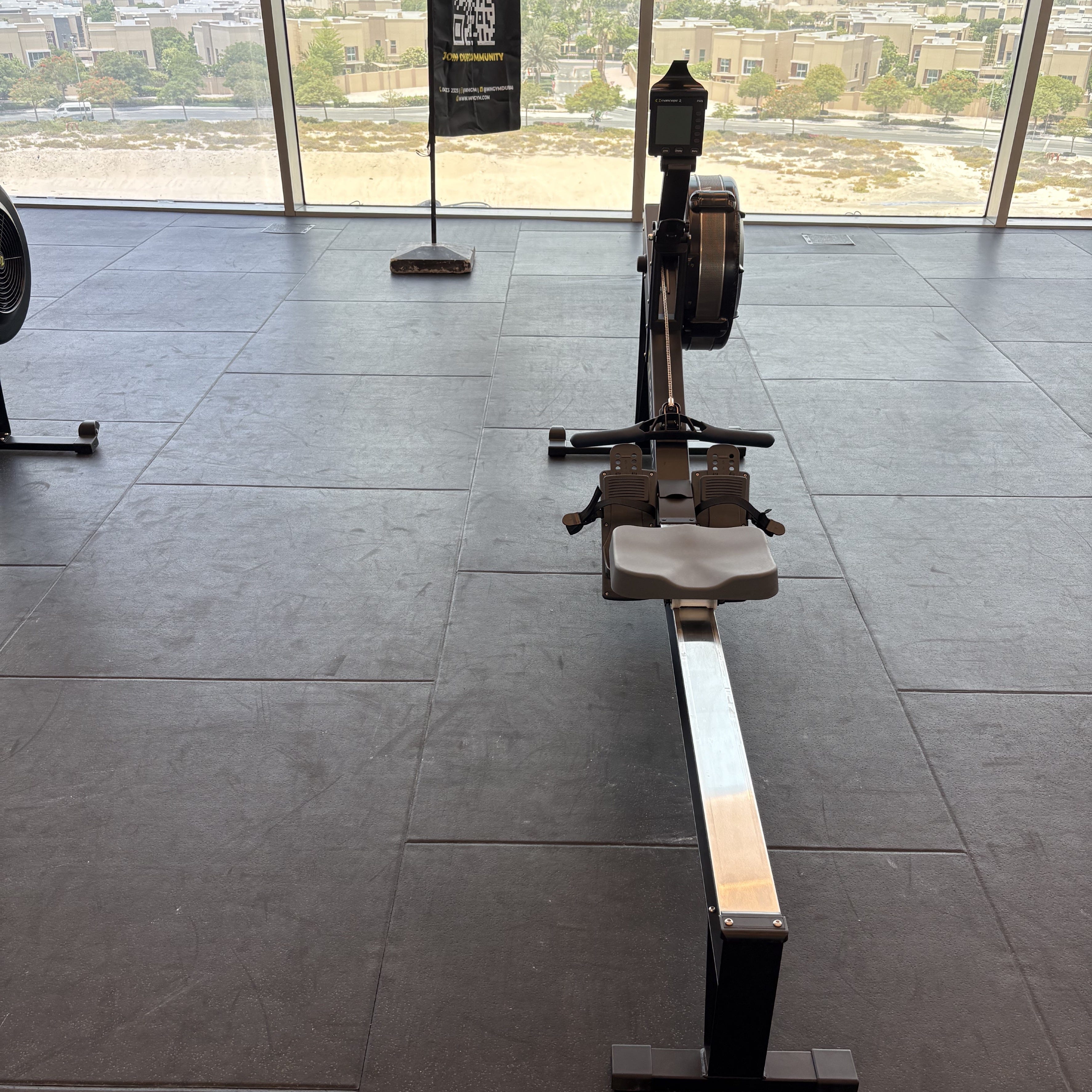
But what do you do when you’re neither lost at sea nor attempting a world record, but just a team of five reasonably fit women with little to no endurance rowing background, taking part in a local gym event you haven’t really trained for? And just to make the choice a little bit harder: what if there is absolutely zero chance you could win anything, regardless of which strategy you pick?
This is precisely the position I found myself in last weekend, together with four of my lovely gym girlfriends, at a competition floor where every other team had at least three male members. If you know anything about rowing, fitness, or human biology, you know that the average performance gap between the sexes is around 10% in most sports, and that includes rowing, even when male and female rowers are matched on bodyweight and VO2Max. This is why most competitions have a separate female category.
Now, in this competition, there was no female category, for the simple reason that there were no other all-female teams. We were the only five women who thought it would be a fun idea to do this together, and so we were there with 5 all-male teams and 10 mixed teams. Podium was out of the question, and to be honest, it didn’t really matter. The vibe was high, the support was incredible, and everybody would have been proud of us regardless of how we did. After all, isn’t it cool to row for 24 hours? I think all of us who were there can confirm that it was just an awesome thing to do. But there was certainly no external incentive to push our limits or try our best, and none of us even really knew what our best would look like anyway. We had every reason to be as conservative as possible. Chill. Snack. Row a little bit. Sleep. Go home.
But that’s not what we did.
We went all in with 10-minute blocks at a sub-threshold pace for the first eight hours, followed by four hours of 8-minute blocks at the same pace. For the remaining twelve hours we kept the shifts down to 4 minutes. Every now and then, someone would take an hour’s rest to sleep, and only three or four of us would keep going. None of us got more than half an hour of sleep (I didn’t sleep at all, just because I didn’t want to miss any fun.) At times, that meant we were doing four minutes of work, eight minutes of “rest”: drinking coffee and speed-chewing jelly babies; watching the teams around us slowly sail through their 30- and 60-minute shifts while their teammates were sleeping it off on the sofas in the dining area outside; nervously checking the clock to find it’s still only 3am; having more coffee and a peanut butter sandwich. Digging deep into the pits of our souls for any remaining stores of resolve to get through the next 4 minutes of work.
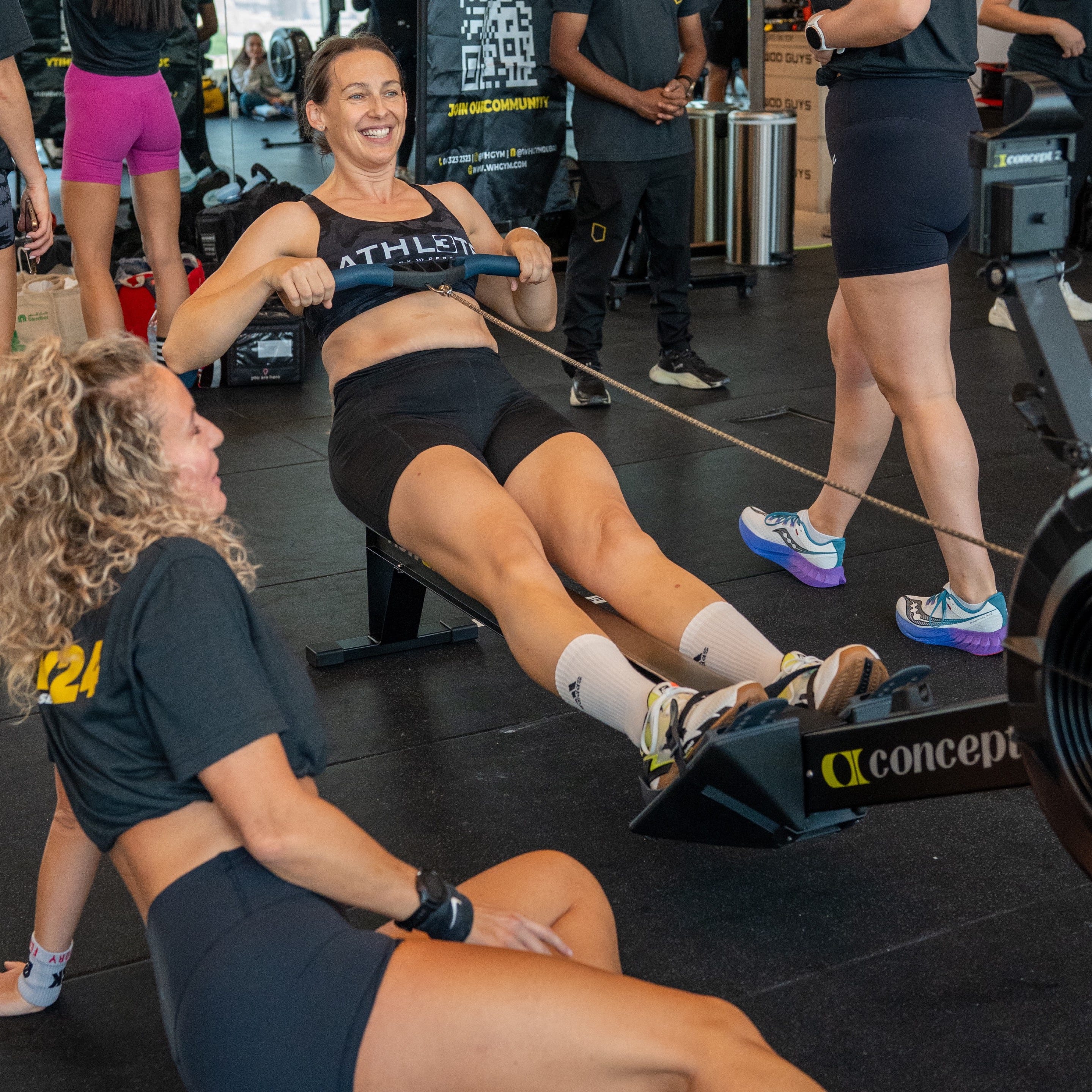
It could have ended badly—how could we have known without ever having attempted anything like this before? It was entirely possible that we would run out of steam, physically or mentally, that we’d injure ourselves or start going at each other’s throats, insane from all the sugar, caffeine, sleep deprivation and the pressure that nobody had put on us. But it did not end badly. In fact, we finished in spectacular spirits: just as strong as we had started, still pulling close to the same pace in the twenty-fourth hour as we had the day before. We finished at almost 320km of total distance, with an overall average pace of 2:15min/500m. I have never felt this proud of any fitness accomplishment before. Not just because of the distance or the pace—what’s fast for me is slow for someone else, and records get beaten all the time. And we didn’t get the podium, of course, although we did come fourth out of the 11 mixed teams, within less than 800m of third place. But I am proud because we all gave our absolute everything, even though we stood to gain nothing.
Because here’s the thing: either you care about excellence or you don’t. If doing your best matters at all, then it matters regardless of circumstances; if it only matters when there’s external pressure or reward, then it doesn’t really matter, at all.
But there’s one more reason why I’m happy we did it the way we did. You see, if you opt for the survival mode, you are not working as a team, but more as a loose group of lone individuals. You divide the work into long, even chunks, and every team member is only responsible for their own shift. Yes, they will suffer, suffer in silence and solitude, as they’re staring at the erg screen for an hour while everybody else is asleep. They will ponder their life and practice staying focused, and they will no doubt get some mental toughness out of it. The problem is that if you’re alone, you’re at your weakest. If it’s only you on that rower, you only have one option: to hang on for dear life.
And look, suffering in silence always sounds tempting to all endurance athletes, because there’s nothing more normal than seeking solitude when you’re in pain. Whether it’s rowing or illness or suicidal ideation—it’s human nature to yearn for self-isolation when things get hard. The last thing you need when you’re hurting is people constantly asking you if you’re ok, with that concerned look on their face; because how do you explain that you’re not ok but that’s ok, you’re just going through it, when it feels like pity is spilling out of their eyeballs. Or, even worse, they’re trying to cheer you up! Why are they trying to cheer you up when there is no light at the end of the tunnel and there are still 11 hours left to row? I get it. Although I was only rowing 4-minute blocks, when things got really hard, I was secretly wishing that all the audience around me would disappear; even though they were supportive, even though they brought life-giving caffeine and doughnuts. They didn’t understand.
But if you’re working in 4-minute shifts, you cannot self-isolate. When time matters, you need people to help with transitions in and out of the foot straps, people who can adjust your damper setting when needed, people who can jump in if you suddenly get a cramp. Most importantly, if you want to go to the real limits of what’s possible, you will need people who are in it with you, going through it with you, in the same exact kind of pain.
Together, as a team, we did something that we could not have done otherwise. We went straight to our limits and we crossed them, and we came through on the other side, holding hands (which hurt like all hell for the next few days.) As it turns out, your limits are so much farther away than you think that they’re nonexistent for all practical purposes.
But if you want to go farther than you think is possible, go together.
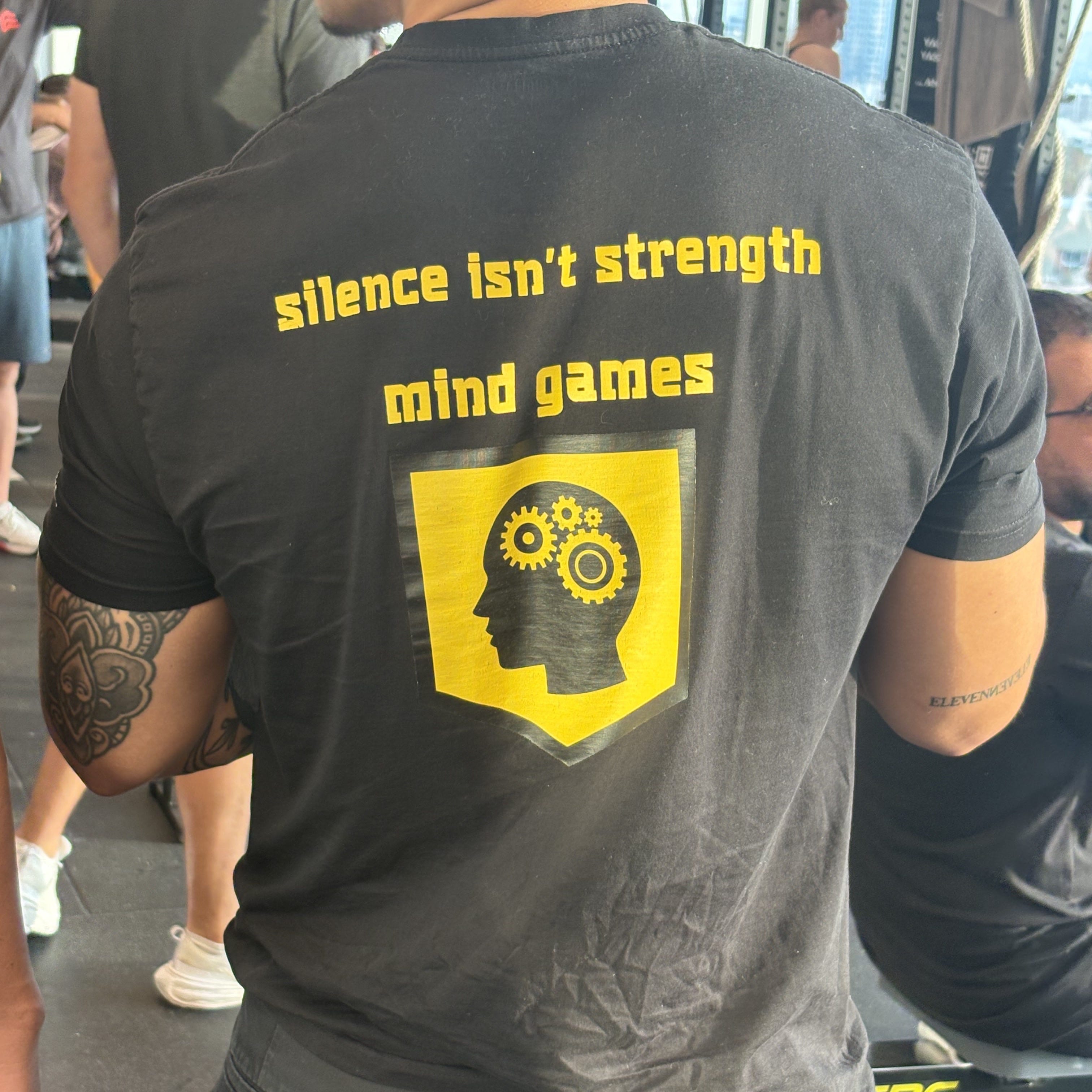
The event was dedicated to raising mental health awareness and oh, how appropriate that was. To me, it was a reminder that when you’re hurting and the only thing you want to do is be left alone, in silence; to grit your teeth and hold on to your steady pace for dear life just to make it through the night—don’t. It sounds like the definition of strength but it’s not. You can survive alone if you have enough pain tolerance, but the only way to do truly incredible things is to stick with your tribe. Stick with your herd. Lone wolves only sound glorious in the Instagram reels of your biohacking coach. In real life, self-isolation kills.
This holds for everything: rowing, recovery, life, and any other endurance activity.
Silence isn’t strength.
Solitude isn’t strength.
Sisterhood is.
I know, I know, I was supposed to write it all last week. But hey, in my defense, I was really, really tired from all the rowing :D I hope you can forgive me for the first missed Sunday since the beginning of this Substack.
Girl, you're insane. xxxxx